The 2026 story
Solar in South Carolina in 2026: what changed.
One thing changed at the end of 2025. Most companies have not updated their sites to say so, and it is the first thing you should understand.
Last reviewed: 2026-08-05
The federal credit for homeowners ended
Through 2025, a homeowner who bought their own system could take 30 percent off their federal taxes. That credit expired on December 31, 2025 — no phase-down. If you buy with cash or a loan in 2026, the federal government gives you nothing. Any site still promoting the 30 percent federal credit for homeowners is out of date.
South Carolina's credit survived
The state's 25 percent credit is still here, with no expiration, plus the property-tax and sales-tax exemptions on the equipment. That is why South Carolina is still one of the stronger solar states in the Southeast, even without the federal credit. See exactly how the state credit works.
What it means for the payback
Losing the federal credit stretched the typical payback in South Carolina from about seven to ten years to about 9 to 12 years. Solar still pays for itself here for most well-suited homes; it just takes a little longer, and the honest math matters more than it used to.
Who this does not work for
A roof with fewer than ten years left, heavy shade from mature oaks, or too little state tax liability to use the credit. We will tell you if you are one of these before you spend a dollar. The fastest way to find out for your specific roof is the estimator.
The math after incentives
Example system. 6.6 kW (typical home size). Assumes cash purchase. Your results may vary based on usage, equipment, and roof.
Assumptions: South Carolina 25% income tax credit. Dominion Energy blended rate of $0.16/kWh. 1.5% annual utility rate increases. System degradation of 0.5%/year. Actual results vary.
- No federal credit in 2026Planning without the federal credit gives you a clear, realistic picture.
- SC 25% income tax creditReduces your state taxes dollar for dollar in the year you go solar.
- Dominion Energy ratesRecent rates average about 15 to 17 cents per kWh and trend higher over time.
- Payback rangeMost homeowners see 9 to 12 year simple payback with our assumptions.
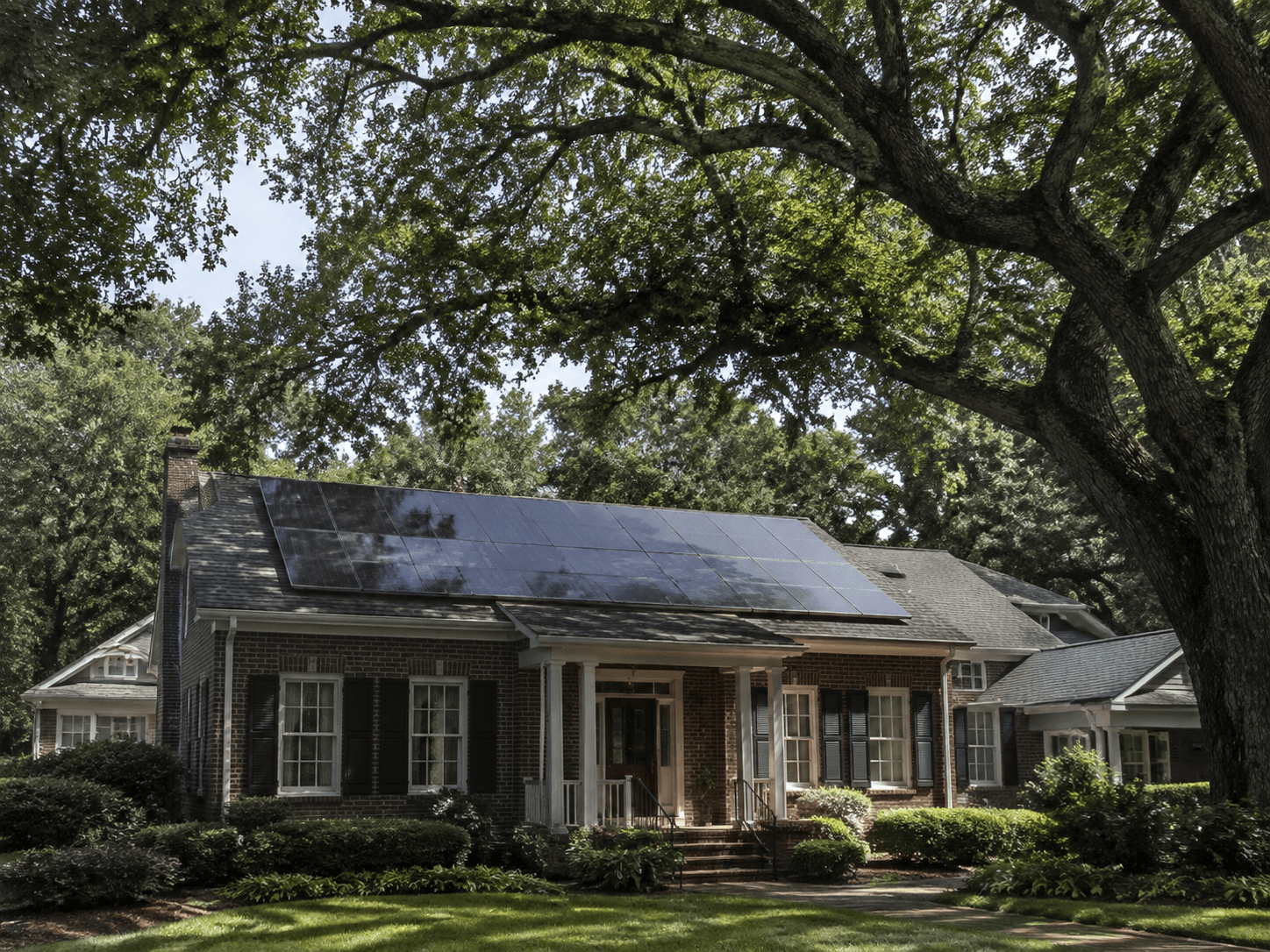
Local climate. Local performance.
Columbia enjoys strong solar production, but our weather brings heat, humidity, and storms. We design systems that perform in the real world.
- Hot, humid summersAugust heat and humidity increase cooling costs. Solar offsets more when you need it most.
- Hurricane seasonWe engineer for high winds and heavy rain. Quality racking and secure installations.
- Plenty of sunshineEven with summer clouds, solar works. Production is strong across the year.
Helpful resources
Learn more about solar incentives, policies, and add-on solutions in South Carolina.
See your real numbers for your roof.
Honest math, dated and in writing. No pressure.